
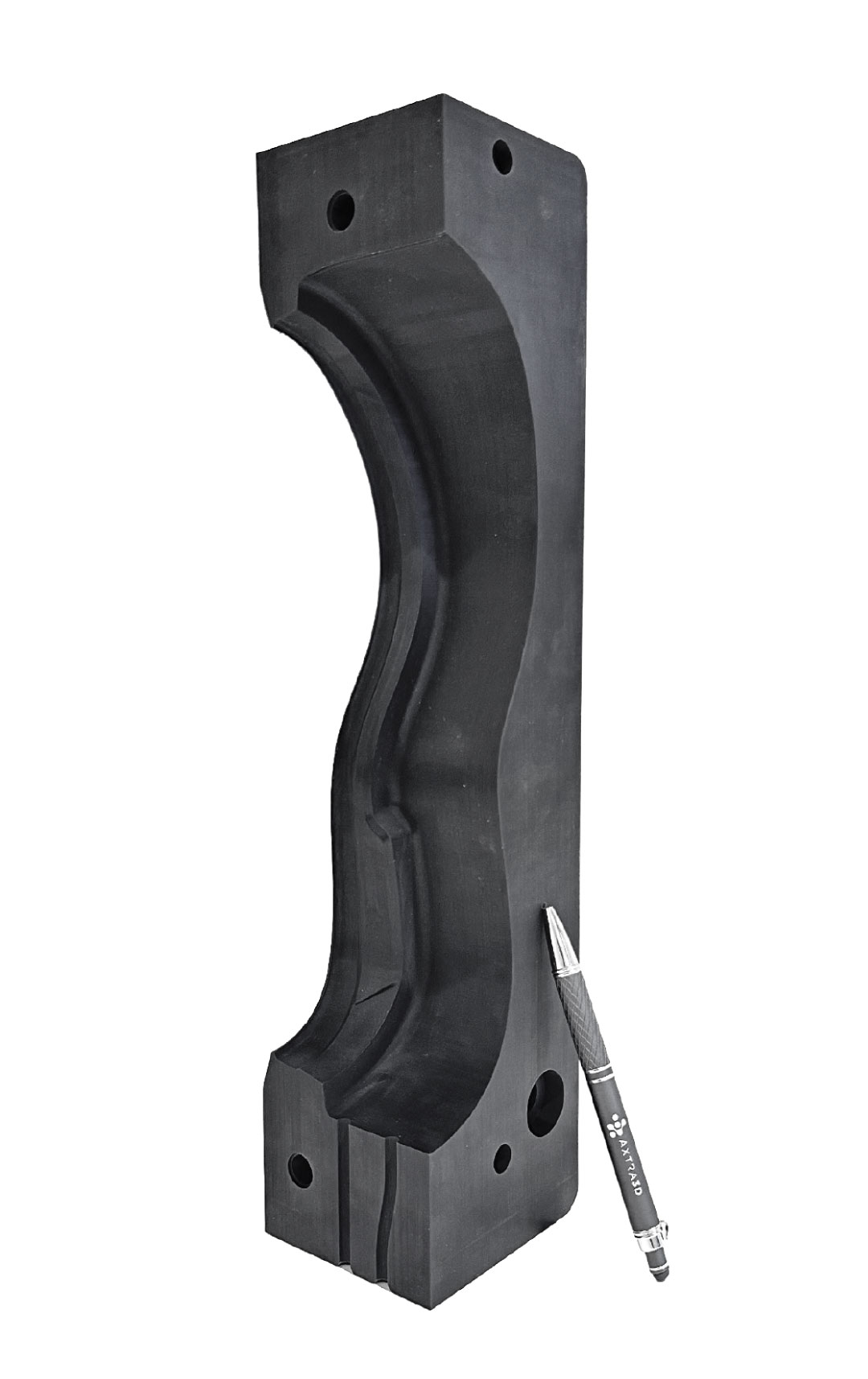
Low Pressure Molds
Accelerate Low Pressure Molding with Digitally Manufactured Tooling
Low Pressure Molding (LPM) has become an increasingly important manufacturing process for protecting delicate electronic assemblies, sensors, connectors, and cable harnesses. By encapsulating components with specialized hot-melt materials at relatively low injection pressures, manufacturers can achieve excellent environmental protection while minimizing stress on sensitive electronics.
However, conventional aluminum or steel tooling can significantly slow product development and increase manufacturing costs, particularly for prototype programs, low-volume production, and customized assemblies.
Axtra Solutions for Low Pressure Molds enables manufacturers to rapidly produce production-ready mold tooling directly from CAD data using the Lumia X1 powered by Hi-Speed SLA (HPS). Combined with qualified high-temperature materials, validated manufacturing workflows, and application expertise, Axtra Solutions delivers a complete digital tooling solution that dramatically reduces lead times while maintaining the dimensional accuracy and surface quality required for successful low pressure molding.
Manufacturers can move from product design to encapsulated functional components in a fraction of the time required using conventional mold manufacturing.
The Manufacturing Challenge
Low Pressure Molding is widely used because it provides excellent protection for electronic components while avoiding the high injection pressures associated with traditional injection molding.
Applications such as automotive electronics, industrial sensors, medical devices, PCB assemblies, cable harnesses, and communication equipment all benefit from this manufacturing process.
Despite the advantages of low pressure molding, the tooling itself often becomes the bottleneck.
Traditional mold manufacturing requires CNC machining, skilled labor, tooling design, and multiple setup operations before production can begin.
For prototype programs and low-volume manufacturing, tooling costs frequently exceed the value of the production run itself.
When product designs change, existing molds often require expensive modifications or complete replacement.
As products become increasingly customized and product lifecycles continue to shorten, manufacturers require tooling solutions that match the flexibility of modern product development.
The Axtra Solution
Axtra Solutions for Low Pressure Molds replaces conventionally machined tooling with a validated digital manufacturing workflow optimized specifically for low pressure molding applications.
The complete solution combines:
Rather than machining molds from aluminum or steel for every design iteration, manufacturers can produce precision mold tooling directly from CAD files within hours.
The resulting molds provide the dimensional accuracy, surface finish, and thermal performance required for low pressure molding while significantly reducing development time and tooling costs.
This enables engineering teams to evaluate products, validate manufacturing processes, and begin production much earlier in the product development cycle.
Customer Value
Reduce Tooling Lead Times
Replace weeks of machining with digital manufacturing.
Low pressure molds can be produced in hours, allowing products to move rapidly from design into manufacturing validation.
Lower Tooling Costs
Traditional tooling often represents one of the largest investments in low-volume manufacturing.
Digitally manufactured molds significantly reduce tooling costs, making prototype production, pilot manufacturing, and customized products economically practical.
Accelerate Product Development
Engineering teams can validate encapsulation processes, evaluate part designs, and optimize manufacturing workflows without waiting for conventional tooling.
Multiple design iterations become practical within a single development cycle.
Validate Production Processes Earlier
Manufacturers can evaluate complete manufacturing workflows using production-intent tooling before investing in permanent molds.
This allows optimization of:
Manufacturing risks are identified earlier when changes remain inexpensive.
Enable Custom Manufacturing
Many electronic products require customer-specific housings, cable configurations, or encapsulation geometries.
Digital tooling enables economical production of customized molds without requiring dedicated machining for every design variation.
Improve Manufacturing Flexibility
Engineering changes can be implemented immediately by updating the digital model.
There is no need to modify or replace expensive machined tooling during product development.
Why Hi-Speed SLA Makes the Difference
Low pressure molding tooling requires far more than dimensional accuracy.
Molds must withstand repeated thermal cycling, maintain precise cavity geometry, deliver excellent surface finish, and produce consistent encapsulated parts over multiple production cycles.
Hi-Speed SLA combines laser precision with DLP productivity to manufacture tooling capable of meeting these demanding requirements.
For low pressure molding applications, this delivers several key advantages.
Exceptional Dimensional Accuracy
Encapsulation tooling must accurately position electronic components while maintaining precise cavity dimensions.
TruLayer™ technology enables highly accurate mold geometries that support repeatable manufacturing and consistent part quality.
Superior Surface Finish
Smooth mold surfaces improve material flow, reduce flash, and produce clean finished components with minimal secondary finishing.
Excellent surface quality also reduces mold preparation before production.
High Thermal Stability
Qualified engineering materials provide the thermal performance required to withstand the elevated temperatures encountered during low pressure molding while maintaining dimensional stability.
This enables reliable production over repeated molding cycles.
Rapid Tool Production
Tooling can be manufactured directly from CAD files in hours rather than weeks.
Manufacturers can rapidly produce multiple tooling configurations, evaluate alternative designs, and optimize production processes without disrupting project schedules.
Repeatable Manufacturing
Validated workflows ensure molds are manufactured consistently across multiple builds, providing reliable tooling performance throughout development and production.
Qualified Materials
Ultracur3D® RG 1100
Axtra Solutions for Low Pressure Molds is built around Ultracur3D® RG 1100, a validated high-rigidity engineering resin developed for manufacturing durable molds used in low-pressure molding and casting processes. Its combination of stiffness, dimensional stability, and thermal performance enables rapid production of tooling that significantly reduces lead times and tooling costs compared to conventional machined molds.
Material Characteristics
Typical Applications
Ultracur3D® RG 1100 is optimized for manufacturers producing prototype and low-volume molded components, enabling rapid fabrication of precision tooling with the durability required for repeated molding cycles while eliminating the cost and lead time associated with conventional metal tooling.
Typical Applications
Axtra Solutions for Low Pressure Molds supports numerous manufacturing applications, including:
Performance Highlights
Why Axtra Solutions
Axtra Solutions for Low Pressure Molds delivers more than digitally manufactured tooling. It provides a complete manufacturing solution that integrates the Lumia X1, Hi-Speed SLA technology, qualified high-temperature materials, validated process parameters, application expertise, and Axtra.Workflow into a proven and repeatable production methodology.
By replacing slow, expensive conventional tooling with digitally manufactured molds, manufacturers gain the ability to accelerate product development, reduce capital investment, validate manufacturing processes earlier, and respond quickly to changing customer requirements. The result is faster product launches, greater manufacturing flexibility, lower tooling costs, and a significantly more agile approach to low pressure molding.