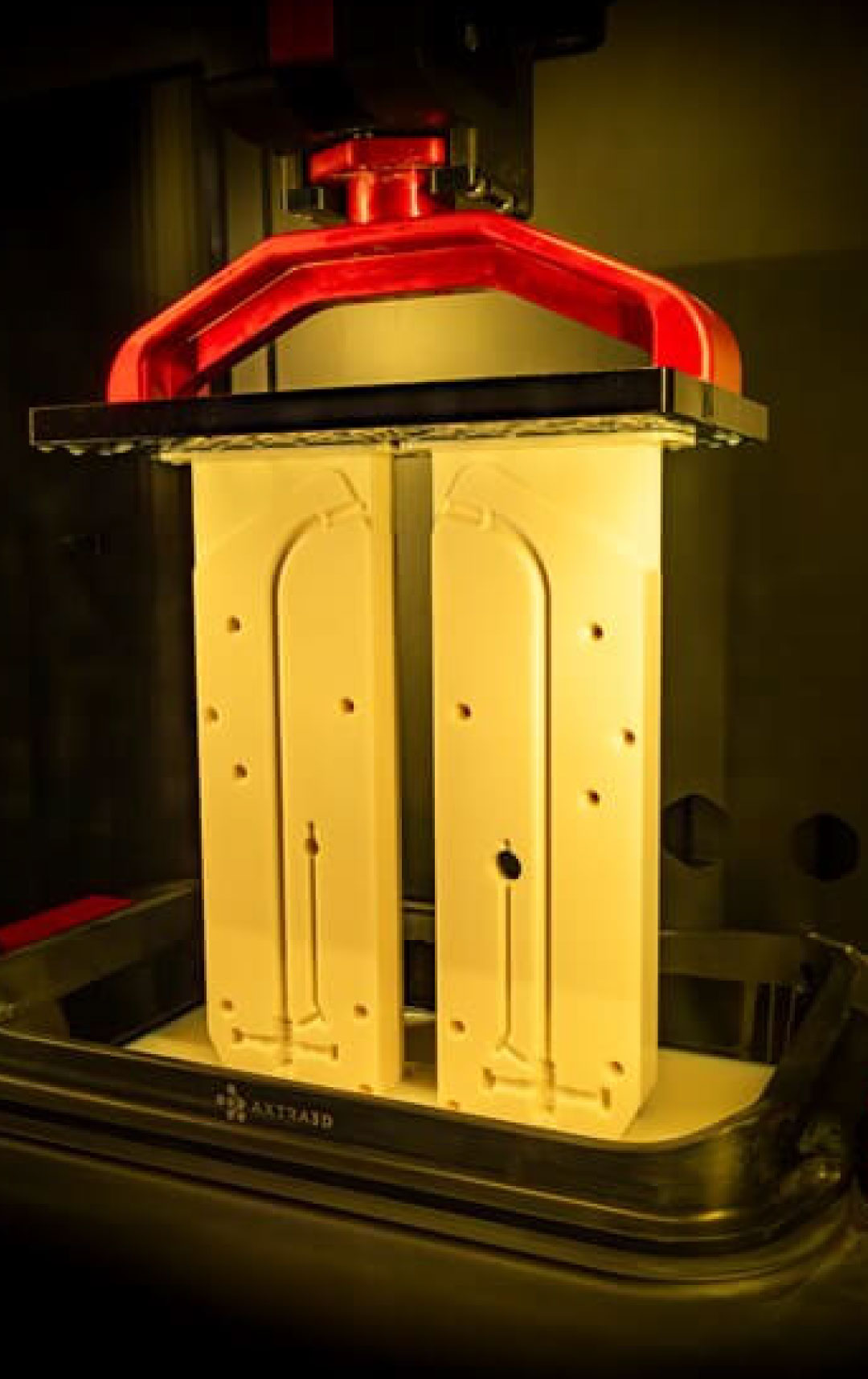
Produce Injection Mold Inserts in Hours. Not Weeks.
Traditional injection mold tooling is designed for high-volume production, but it comes with significant upfront costs, long lead times, and limited flexibility when designs change. For product development, bridge manufacturing, low-volume production, and pilot runs, manufacturers often need tooling much faster without compromising dimensional accuracy or molded part quality.
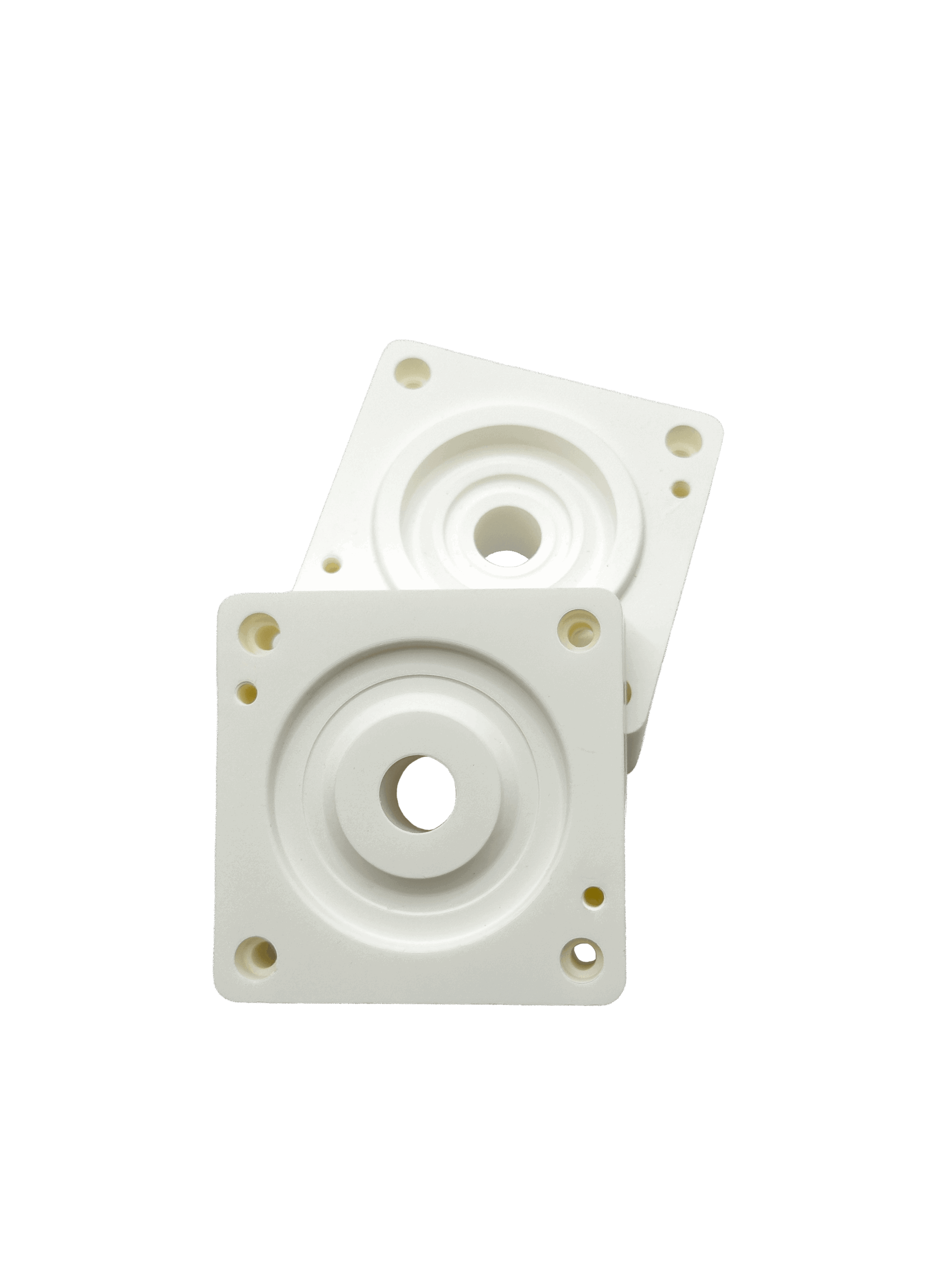
Axtra Solutions for Ceramic Mold Inserts transforms this process by enabling manufacturers to move from a CAD model to injected parts within a single working day. By combining the Lumia X1 powered by Hi-Speed SLA (HPS), validated ceramic-filled materials, optimized manufacturing workflows, and application expertise, customers gain a complete digital tooling solution that dramatically accelerates product development while reducing tooling costs and manufacturing risk. Customers have demonstrated workflows that move from design to molded parts in less than a single shift. (LinkedIn)
The Manufacturing Challenge
Injection molding remains the preferred manufacturing process for producing high-quality plastic components, but conventional tooling introduces several limitations during product development and low-volume manufacturing.
Traditional steel and aluminum tooling typically requires extensive machining, skilled labor, and long procurement cycles. Even relatively simple mold inserts can take several weeks to manufacture, delaying product launches and increasing engineering costs.
When products require multiple design iterations, each tooling revision introduces additional expense and schedule delays. As a result, engineering teams often reduce the number of iterations they perform, potentially compromising final product performance.
For bridge production, pilot manufacturing, custom products, and low-volume parts, the economics of conventional tooling become even less attractive. Manufacturers are frequently forced to choose between expensive production tooling or lower-quality prototype parts that fail to accurately represent production performance.
The Axtra Solution
Axtra Solutions for Ceramic Mold Inserts eliminates the traditional compromise between tooling speed and tooling performance.
The solution combines:
Rather than purchasing a printer alone, customers adopt a validated manufacturing solution that has been optimized specifically for injection mold insert production.
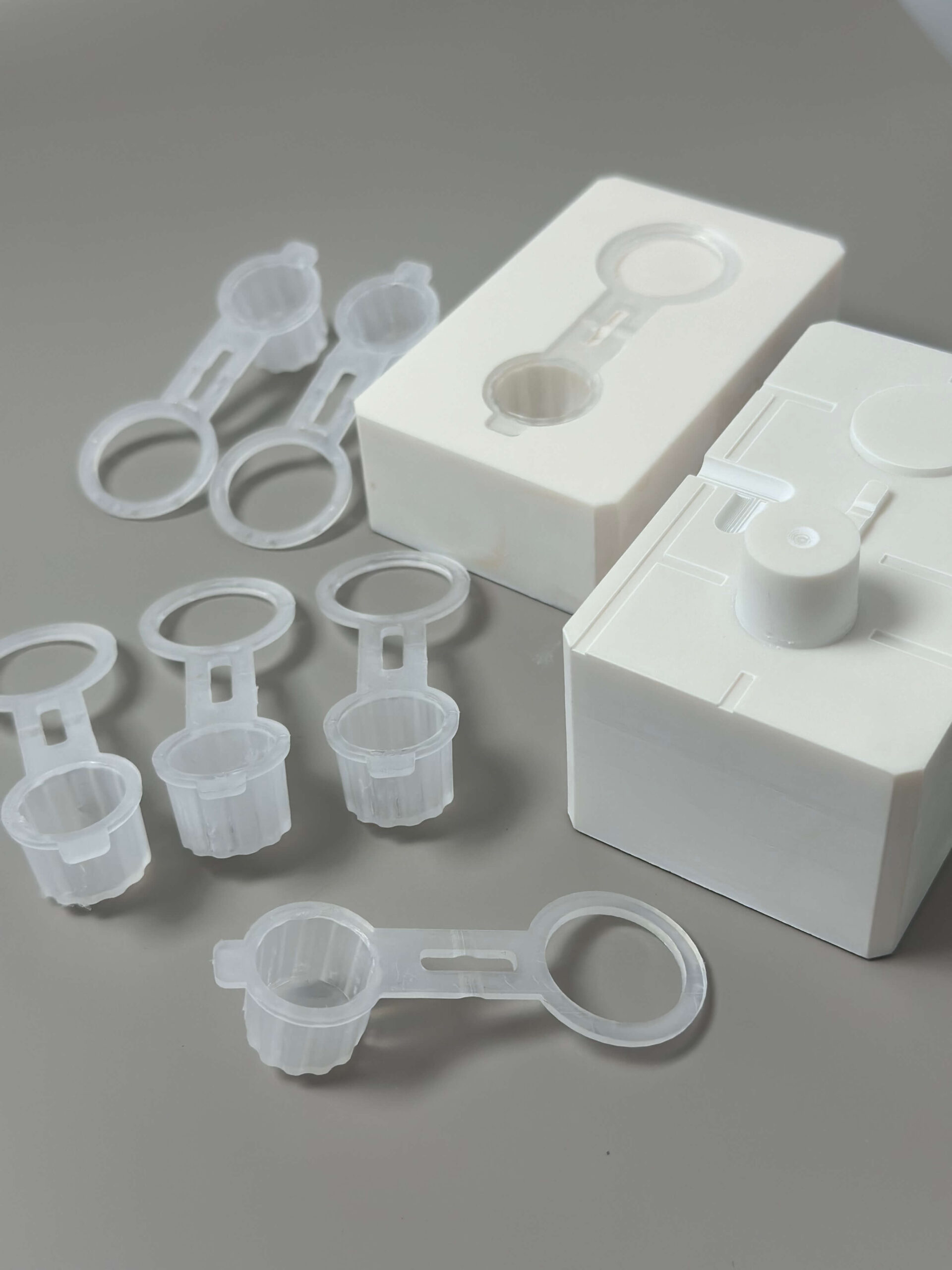
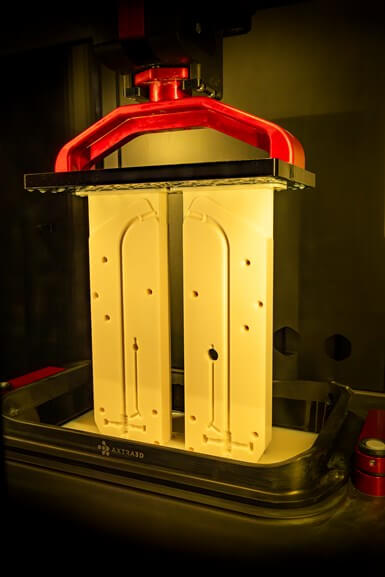
This integrated approach enables ceramic mold inserts to be manufactured in just a few hours, allowing engineers to install inserts directly into an injection molding press with little or no secondary machining while maintaining excellent dimensional accuracy and surface quality. Demonstrations have shown production-ready inserts printed in about two hours and progressing from digital design to injected polypropylene parts within a single shift. (LinkedIn)
Customer Value
Accelerate Product Development
Reduce tooling lead times from weeks to hours.
Engineering teams can evaluate multiple product revisions within days instead of waiting weeks for conventional tooling.
Lower Tooling Costs
Ceramic mold inserts eliminate the cost of machining steel or aluminum molds during early production stages.
This makes injection molding economically viable for prototype programs, pilot production, and bridge manufacturing.
Increase Design Iterations
Because tooling becomes inexpensive and rapidly available, engineers can optimize products through more design iterations before production release.
Better products reach the market faster.
Manufacture Production-Representative Parts
Unlike many additive manufacturing approaches, ceramic mold inserts allow customers to produce actual injection molded components using production thermoplastics.
This provides realistic evaluation of:
Reduce Manufacturing Risk
Design problems are identified before committing to expensive production tooling.
Potential tooling modifications become inexpensive rather than costly engineering changes after steel tooling has been manufactured.
Enable Bridge Manufacturing
Ceramic mold inserts provide an ideal solution between prototyping and full-scale production.
Manufacturers can produce hundreds or thousands of molded components while permanent production tooling is being manufactured or before production volumes justify traditional tooling.
Why Hi-Speed SLA Makes the Difference
Ceramic-filled photopolymers are among the most demanding materials to print successfully.
Their high filler loading requires exceptional process control to achieve consistent curing, dimensional accuracy, and surface finish.
Hi-Speed SLA was specifically developed to overcome many of the limitations associated with traditional photopolymer technologies.
Unlike conventional systems that rely on a single exposure method, HPS combines laser precision with DLP productivity to deliver both high throughput and exceptional accuracy.
For ceramic mold inserts this provides several important advantages.
Exceptional Dimensional Accuracy
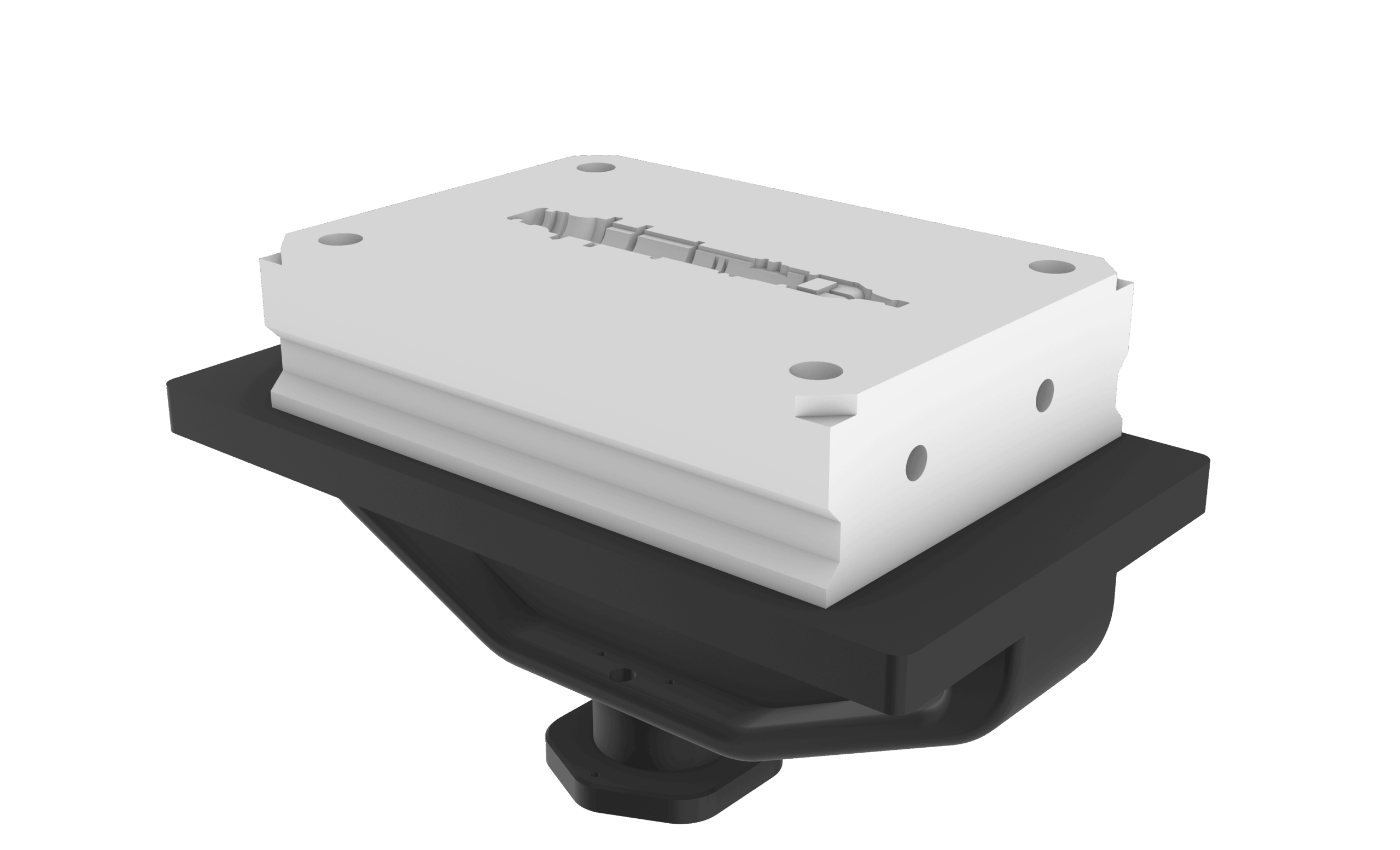
TruLayer technology produces highly accurate mold geometry, allowing mold inserts to fit directly into mold bases with minimal adjustment.
Flatness approaching 20 μm has enabled mating surfaces to be used without post-machining in many applications. (LinkedIn)
Superior Surface Finish
Smooth cavity surfaces reduce polishing requirements while producing excellent molded part appearance.
Fine textures, sharp edges, and detailed features are faithfully reproduced.
Filled Material Capability
The HPS process enables reliable printing of highly ceramic-loaded engineering materials while maintaining excellent layer consistency and dimensional stability.
High Throughput
Large mold inserts can be produced in hours rather than days.
Customers can rapidly transition from CAD design to functional tooling during a single working shift.
Repeatable Manufacturing
Consistent exposure control produces repeatable mold inserts across multiple builds, enabling predictable manufacturing performance.
Qualified Material
BASF Forward AM Ultracur3D® RG 3280
Axtra Solutions for Ceramic Mold Inserts utilizes Ultracur3D® RG 3280, a ceramic-filled engineering photopolymer developed specifically for functional tooling applications.
The material combines very high stiffness with outstanding temperature resistance, making it suitable for repeated injection molding cycles while maintaining dimensional stability.
Material Highlights
These material properties enable production-ready mold inserts capable of producing hundreds of molded parts, with softer polymers such as TPU and TPE potentially achieving up to approximately 3,000 injection cycles depending on part geometry and process conditions. (Forward AM)
Typical Injection Materials
Customers have successfully molded a wide variety of engineering thermoplastics, including:
Material compatibility depends on processing conditions, mold design, and production requirements.
Typical Applications
Ceramic Mold Inserts are ideal for:
Performance Highlights
Why Axtra Solutions
Axtra Solutions extends beyond providing a 3D printer or a qualified material. It delivers a complete manufacturing solution that integrates hardware, materials, validated process parameters, application expertise, and Axtra.Workflow into a repeatable production methodology.
For Ceramic Mold Inserts, this means manufacturers can confidently replace lengthy and expensive tooling workflows with a digital manufacturing process that produces accurate, durable mold inserts in hours instead of weeks. The result is faster product development, lower manufacturing costs, greater engineering agility, and a significantly shorter path from concept to production-ready molded parts.